High-Bandwidth Memory (HBM) has steadily transitioned from a niche premium to a core system-level enabler for modern AI servers. As models grow larger and throughput demands intensify, designers increasingly attach value to bandwidth, density, and energy efficiency that HBM uniquely provides.
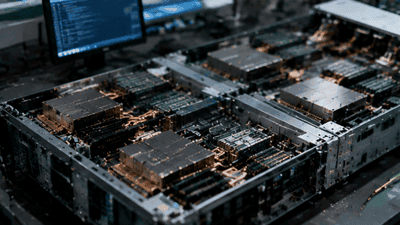
How we define “value share” per server unit
“Value share” in this context is the percentage of the AI server’s hardware BOM cost attributable to HBM-based memory subsystems and the incremental packaging, cooling, and integration required to use those modules. It includes:
- The premium paid for HBM modules versus equivalent-capacity DDR/GDDR alternatives (ASPs per GB), including packaging premiums for CoWoS, hybrid-bond, or interposer-based modules.
- Ancillary costs attributable to HBM adoption: advanced thermal subsystems (cold plates, microfluidic plumbing), modified PCBs or mezzanine carriers, and qualification/engineering NRE.
- Net system-level offsets: reductions in motherboard NICs, network interconnects, or additional server nodes due to higher per-node throughput and lower inter-node communication needs (these offsets lower net incremental cost but are part of the system trade-off calculation).
Tracking value share over time requires combining module ASPs, per-server module counts, and system-level design trade-offs that either raise or reduce overall server costs.
Why HBM’s per-server value share is rising
Several reinforcing forces increase HBM’s share of AI server value:
- Model and workload growth: Modern transformer models, dense recommendation engines, and multi-modal architectures increase working-set sizes and bandwidth needs. HBM provides orders-of-magnitude higher on-package bandwidth than DDR or GDDR, making it essential for top-tier accelerator designs.
- Per-node performance premium: HBM-equipped accelerators deliver significantly more throughput per socket, reducing the number of servers, interconnects, and racks required for a given workload. Customers perceive and pay for this performance uplift, preserving HBM pricing power.
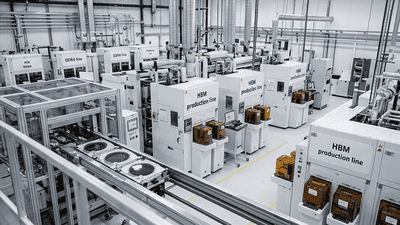
- Integration and packaging premiums: CoWoS and hybrid-bond packaging add cost but enable the performance characteristics that justify the premium—these aggregated costs appear in the server BOM under memory and integration expenses.
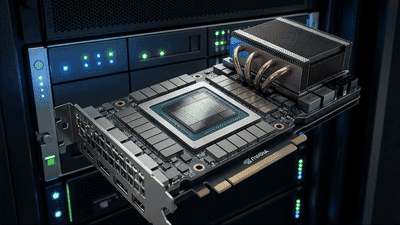
- Thermal and power architectures: HBM’s proximity to compute reduces energy lost to off-package transfers, but it often increases upfront costs for cooling. As hyperscalers internalize power savings at rack scale, they allocate more of the server budget to HBM-capable modules and cooling infrastructure.
- Contracting and allocation dynamics: Suppliers often price prioritized allocation and guaranteed lead-times into contracts, which increases effective per-unit cost for production servers when procurement requires guaranteed supply.
Quantifying the shift: representative numbers
Actual numbers vary by server class, accelerator choice, and generation of HBM. Below are illustrative, conservative examples to show how value share has evolved between a “pre-HBM” baseline era and modern HBM-equipped systems. These numbers are indicative; adapt them to your product BOM for precise planning.
Baseline (traditional DDR/GDDR-based server, 2019–2021)
- Server BOM (typical AI training node): $25,000
- Memory subsystem cost (DDR/GDDR DIMMs/modules): $3,000 (12% of BOM)
- Cooling and specialized chassis incremental cost: $500 (2% of BOM)
- Total memory-related value share: ~14%
HBM-equipped server (HBM3/HBM3e era, 2024–2026)
- Server BOM (comparable performance class): $40,000 (higher-performance accelerators and denser racks)
- HBM module cost (per-server, multiple stacks): $6,000–12,000 depending on stack count and HBM generation
- Packaging/thermal/integration incremental cost: $2,000–4,000 (cold plates, modified carriers, qualification)
- Total memory-related value share: 20–40% of BOM (illustrative midpoint ≈ 30%)
HBM4-era, high-density nodes (2027+ projection)
- Server BOM (higher capability nodes): $60,000 (driven by top-tier accelerators, power delivery, and cooling)
- HBM4 module cost (per-server): $12,000–20,000 depending on stack count and integrated cooling
- Ancillary HBM integration cost: $3,000–6,000
- Projected memory-related value share: 25–45% of BOM, depending on system-level offsets from higher per-node throughput
These illustrative figures show that HBM can move from a mid-teens percentage of an AI server BOM to a dominant line-item. The exact share depends on number of HBM stacks per accelerator, module ASPs, and how effectively system architects convert bandwidth into reduced system counts or lower networking costs.
System-level offsets — why higher HBM cost can be justified
HBM’s higher upfront cost is frequently offset at the system and datacenter level. Key offsets include:
- Higher per-node throughput reduces the number of nodes required for training, cutting server count, network fabric requirements, and associated operational expenses.
- Lower inter-node communication reduces switch port counts and expensive RDMA fabrics, improving rack-level efficiency and lowering networking CAPEX in large clusters.
- Power-per-flop improvements translate to lower total energy costs over the lifecycle of a cluster, especially when amortized against high utilization used in AI training workloads.
- Improved time-to-train reduces operational lead times for product development and model iteration—an economic benefit often monetized indirectly by hyperscalers and enterprises.
When these offsets are included in TCO calculations, the premium for HBM often produces attractive returns for performance-sensitive buyers—even when HBM comprises a large share of the server BOM.
Buyers’ procurement implications
As HBM’s value share rises, procurement teams and architects should adapt strategies:
- Model TCO, not just unit price: Evaluate HBM adoption on throughput-per-dollar, energy-per-training-run, and rack-level density metrics rather than only per-module ASPs.
- Secure long-term supply: Given packaging and test bottlenecks, long-term contracts with capacity reservations reduce allocation risk for large fleet builds.
- Co-invest where material: For very large fleets, co-investing in packaging or test capacity can be cost-effective and secure priority access during peak ramps.
- Design for flexibility: Where feasible, design boards and systems that can accept alternate memory modules or future HBM generations with minimal requalification to reduce supplier lock-in risk.
- Include integration costs early: Budget for thermal and power design changes during initial procurement planning to avoid late surprises that raise per-unit BOM allocation to HBM-related lines.
Implications for memory suppliers and OSATs
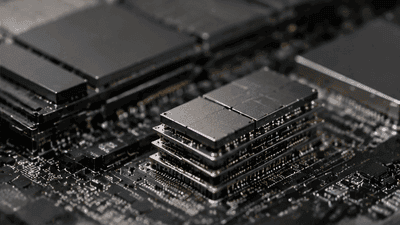
Rising per-server HBM value share generates strategic opportunities and responsibilities for suppliers:
- Value capture: Suppliers that provide finished modules, integrated thermal solutions, and validation services capture more of the system-level value and can justify higher ASPs.
- Service differentiation: Offering faster qualification programs, co-engineering, and prioritized allocation to strategic buyers improves long-term commercial relationships and supports premium pricing.
- Capacity planning: Suppliers must align wafer, interposer, and packaging investments with customer demand signals to avoid lost revenue from allocation constraints or unmet orders.
- Customization and product tiers: Creating tiered HBM offerings—performance-first, cost-balanced, and capacity-first modules—allows suppliers to segment the market and defend margins across buyer classes.
Investor perspective and margin dynamics
HBM’s growing share of server BOM has observable financial implications:
- Revenue mix uplift: Memory makers with HBM exposure can improve blended ASPs and gross margins by selling finished modules and capturing packaging premiums.
- Capex and ROI considerations: Capturing the HBM opportunity requires heavy capex in packaging and test; investors should monitor capex efficiency, yield ramp velocity, and contract coverage to evaluate return timelines.
- OSATs and equipment vendors benefit: Increased HBM penetration drives demand for advanced packaging services, hybrid-bonding equipment, and thermal solution supplies—creating attractive TAM growth scenarios for suppliers.
- Risk of ASP compression over time: As packaging capacity expands and yields improve, HBM ASPs may compress; suppliers who capture margin through services and vertical integration mitigate this risk.
Design and engineering considerations
System engineers must treat HBM as a system-level variable rather than a drop-in memory change:
- Thermal co-design: HBM density and stack counts mandate early coordination between package designers and server thermal teams—cold plates, liquid loops, and airflow plans need integration at the chassis level.
- Power delivery: Higher per-die current demand for HBM stacks requires careful PDN design on mezzanine carriers and motherboards to avoid IR drop and stability issues.
- Signal and timing validation: Co-qualification with module vendors reduces schedule risk. Early investment in validation testbeds accelerates production ramps.
- Reliability engineering: HBM-equipped designs require more extensive life-cycle and burn-in testing given their higher thermal and mechanical stress profiles.
Emerging trends that could further increase—or decrease—HBM’s value share
Several developments could materially shift how much of the server BOM HBM represents in coming years.
- HBM4 and new packaging: If HBM4 delivers substantially higher capacity per stack and signaling at competitive costs, per-server HBM share may rise further as OEMs deploy fewer accelerators per cluster for the same workload.
- Packaging commoditization: As hybrid-bond and interposer capacities scale and standardize, HBM module ASPs could fall, lowering per-server value share even as HBM adoption rises.
- Alternative memory or architectural innovations: Advances in on-die memory, chiplet fabrics, or disaggregated memory pooling could reduce reliance on HBM for certain classes of workloads, compressing its BOM share.
- Cooling technology improvements: If lower-cost thermal solutions that integrate with HBM arrive (e.g., standardized cold-plate modules), incremental integration costs per server drop, increasing the net case for HBM adoption even at higher module prices.
Practical recommendations
Based on the dynamics above, stakeholders should consider the following actions:
- Hyperscalers and large OEMs: Model HBM adoption using throughput- and TCO-driven metrics. Lock in supply via long-term contracts for large fleet builds and consider co-investment in packaging/test capacity where justified.
- Mid-size OEMs and enterprises: Prioritize mixed fleets—use HBM where performance is critical and DDR/GDDR where cost efficiency matters. Negotiate flexible contract clauses to allow switching as ASPs evolve.
- Memory suppliers and OSATs: Offer modular integration packages and scaled service tiers. Invest in yield engineering and qualification frameworks to reduce buyer integration friction and capture higher service margins.
- Investors: Evaluate capex discipline, contract coverage with hyperscalers, and evidence of margin capture beyond wafer sales (packaging, integration, and service revenue) when valuing memory firms.
Conclusion
HBM’s share of AI server BOMs is rising because the memory architecture uniquely addresses the bandwidth and energy constraints of modern AI workloads. While the raw module and integration costs are substantial, system-level offsets—higher per-node throughput, fewer servers per workload, and lower inter-node communication costs—frequently justify the premium. For suppliers, HBM’s rise offers a path to higher ASPs and richer margin pools, but capturing that value requires investments in packaging, test, and service capabilities. For buyers, success hinges on rigorous TCO modeling, securing supply, and treating HBM adoption as a system-design decision rather than a purely component-level trade-off.